ECHOES IN TRANSITION
Built Together
Built Together. Learned Together.

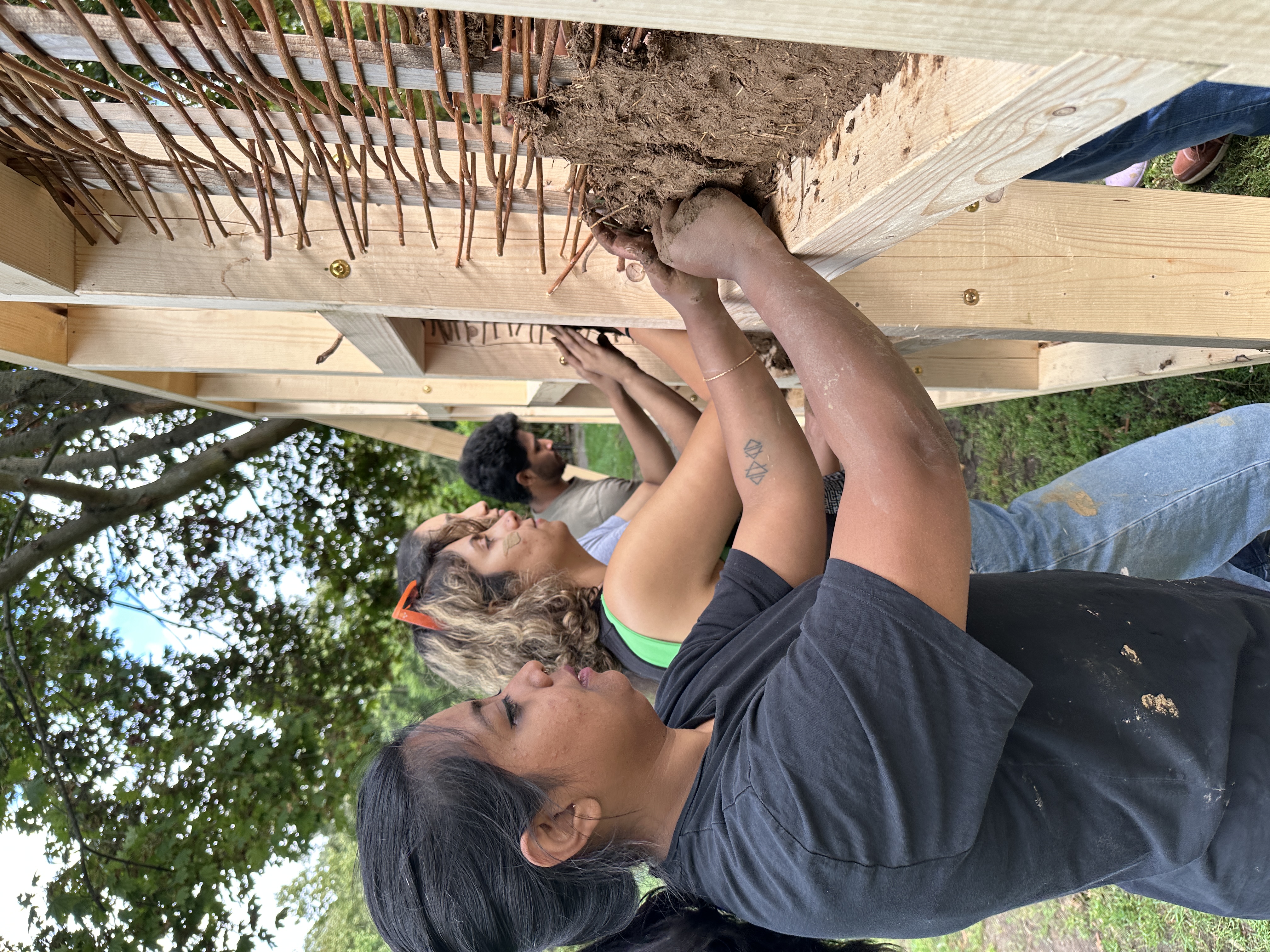
Across four workshop days, Echoes in Transition was built collectively through hands-on earth-building sessions. Participants worked alongside the artist and Lehmbau e.V., exploring traditional techniques through weaving, clay-and-straw wrapped laths, mixing and applying clay, and experimenting with different surface finishes.
Much of the material carried a previous life. Wooden laths used within the walls were reused, while clay recovered from unfired bricks was broken down, mixed again and returned to the structure by hand. Rather than simply observing the work, participants became part of its making.
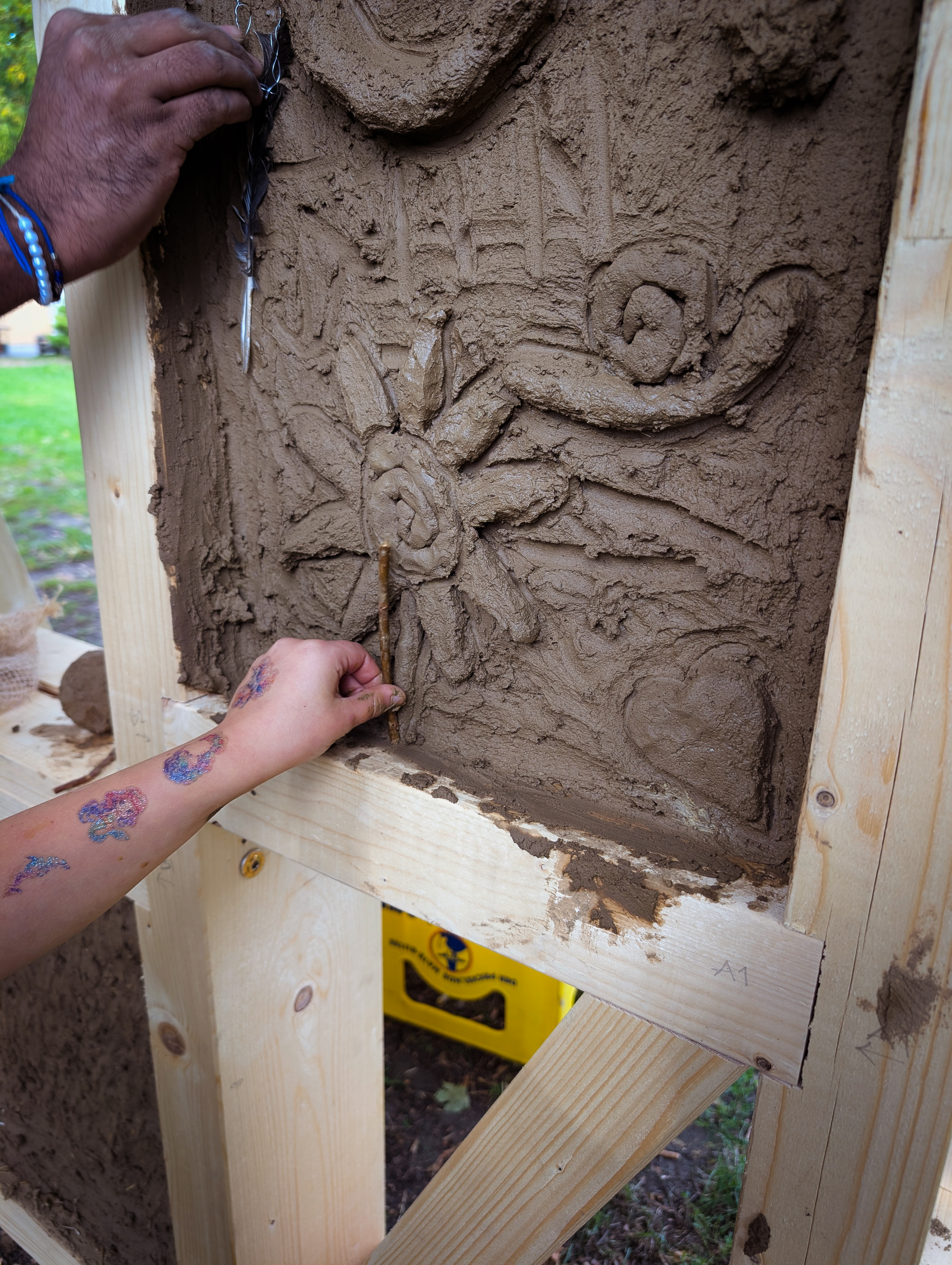
Handprints, drawings, textures and personal objects gradually accumulated across the walls. Each contribution remained visible within the installation, turning the workshop into both a building process and a shared archive of memory, material and belonging.
What We Did Together
Learn
Explored traditional earth-building techniques through hands-on making.
What We Did Together
Build
Wove wooden laths, prepared clay-and-straw wrapped laths, mixed clay and built the walls together.
Explore
Connected material practice with Lusatia’s building heritage, memory and Umgebindehäuser.
Leave Your Mark
Added handprints, drawings, textures and personal objects to the clay, becoming part of the finished installation.
How It Unfolded
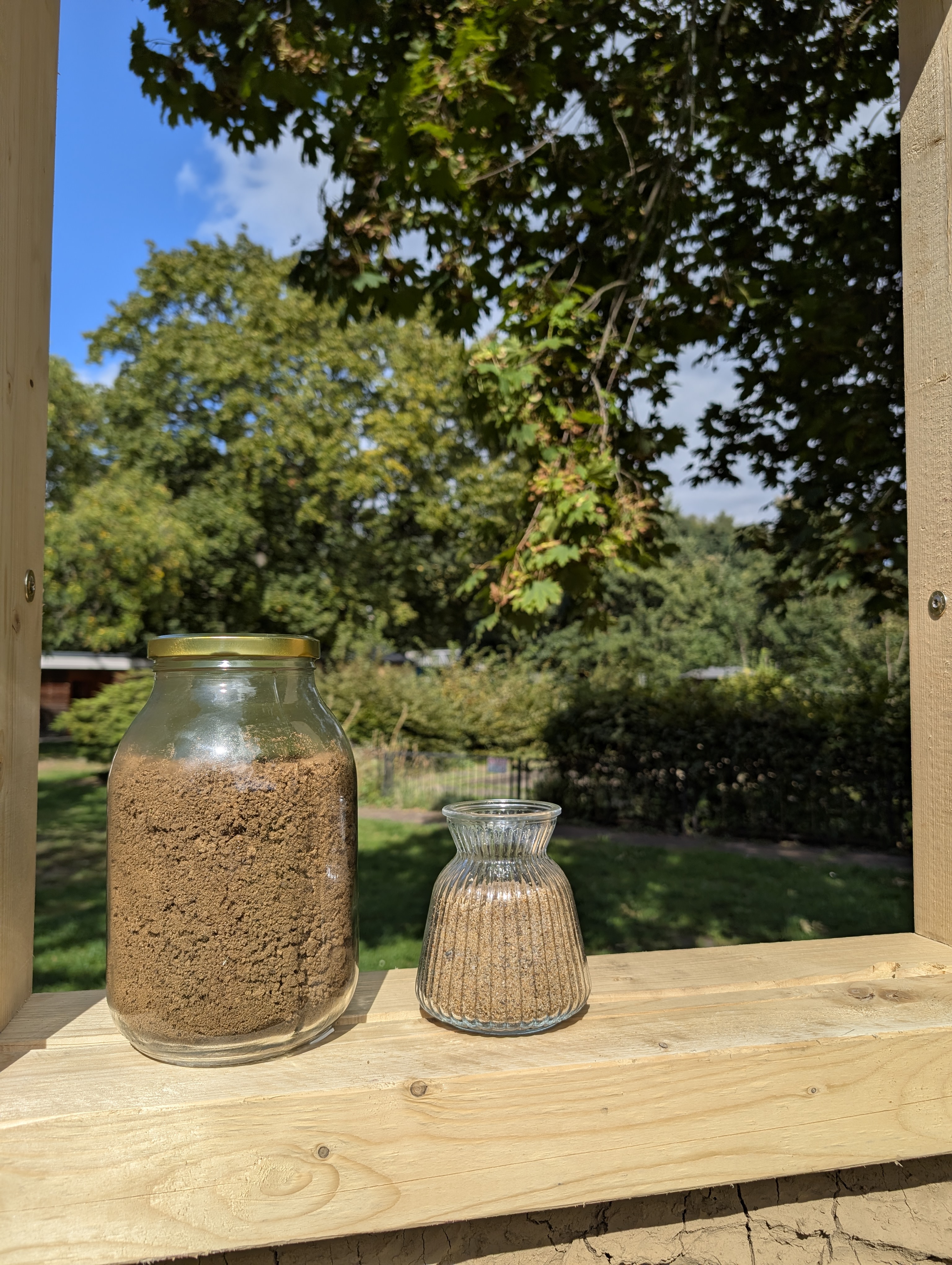
The workshop began with an introduction to earth-building materials and learning to judge clay through touch and consistency. Participants learned to weave the wooden laths, mixed daub together by foot using clay, sand, straw and water, and began filling the walls. The first clay-wrapped wooden laths were also prepared and left to dry for later installation.
Workshop Session 1
How it Unfolded
5–6 September 2026
10:00–17:00
Strombad Cottbus
Workshop Session 2
A new participant group went through the same hands-on process: material introduction, weaving, mixing daub by foot, building up the walls, and working with the finer finishing plaster for drawings, textures and embedded memory objects. The previously prepared clay-wrapped laths had by then dried and were installed into the timber frame during the second session.
7–8 September 2026
10:00–17:00
Strombad Cottbus
Finishing Workshop
A smaller group returned to complete remaining woven elements, tidy and clean the structure, and prepare the installation for drying and public display.
9 September 2026
10:00–17:00
Strombad Cottbus
Installation in Progress
The earth surfaces were left to dry and stabilise while the installation received its final adjustments.
10–12 September 2026
Not open to visitors during this period.
Installation on View
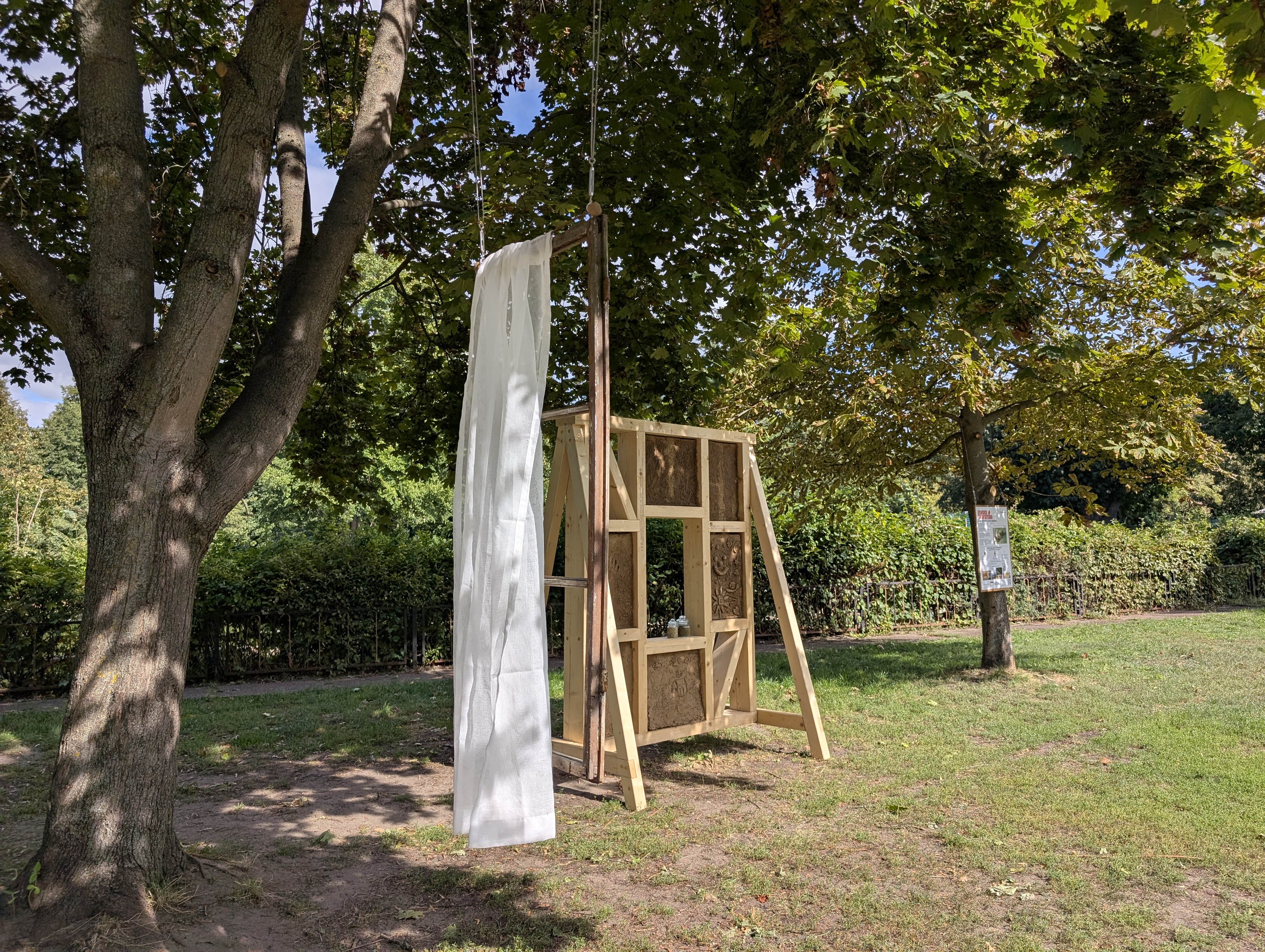
The completed installation is open to the public as part of the OpenArt Lausitz Biennale. Visitors can experience the walls shaped through four days of collective making, including handprints, drawings, textures and personal memory objects left by participants.
13–20 September 2026
09:00 - 23:00
Strombad Cottbus
Two Groups, One Collective Process
The workshop took place in two sessions with different participant groups on 5–6 September and 7–8 September. Each group experienced the same core process — learning about the materials, weaving, mixing daub by foot, applying clay, working with finishing plaster and embedding personal memory objects.
The clay-wrapped wooden laths were prepared during the first session so they could dry before being installed during the second. A smaller finishing day on 9 September completed the remaining details and prepared the work for drying and public display.
Moments from the Workshop


Follow the Journey
Watch the process unfold as we bring 'Echoes in Transition' to life. From the first weave to the final layer of earth, witness the collective creation of Lusatia's memory walls.
Location
On View @
Strombad Cottbus
till 20th September 2026
08:00 till 23:00
Future of the Memory Wall
Currently it is planned to be dismantled after 20th September 2026 and moved to BTU Cottbus main campus where it will possibly be placed at Lehmbau e.V. But unfortunately, to make that possible we need to break the clay parts. If anyone has a solution for that, please feel free to contact me.